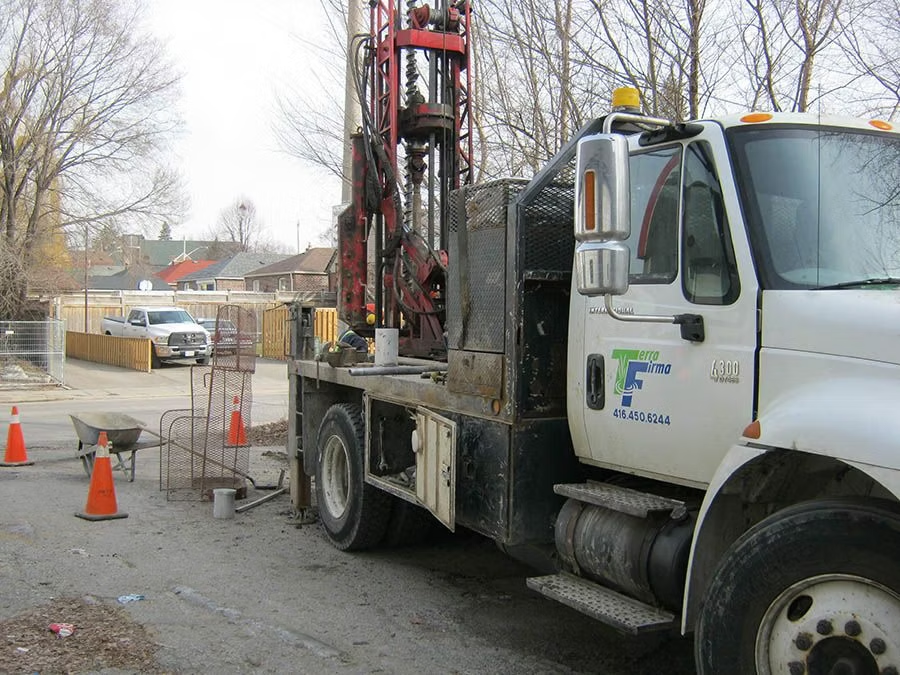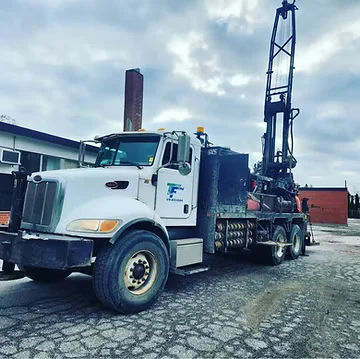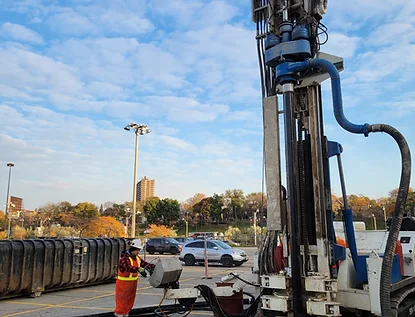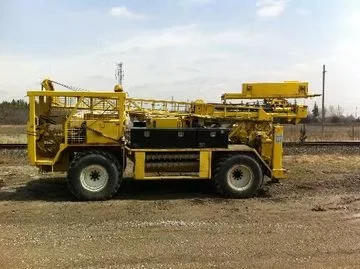
A downtown investigation is a different job to a greenfield one. Access, headroom, noise, and utilities all constrain what is possible — and most of that can be worked out before mobilization.
Drilling on an open field is straightforward. Drilling in downtown Toronto, in a parking garage, inside an operating building, or in a laneway behind a row of commercial units is a different exercise entirely.
Most urban drilling problems are solvable. What causes them to become expensive is discovering them on the morning of day one.
Access is the first question
Before anything else, the rig has to reach the borehole location. That means checking:
- Gate and doorway widths along the whole route, not just the entrance
- Weight limits on slabs, decks, and any structure being crossed
- Turning space for the rig and the support vehicle
- Overhead clearance along the route, including door headers and pipe runs
- Whether the route stays passable while the building operates
Compact and limited-access rigs exist precisely for this, and they will go where a truck-mounted rig cannot. They also advance more slowly and reach less depth, so it is a genuine trade-off rather than a free solution.
Headroom decides the tooling
Indoor drilling and drilling under structures is governed by the ceiling. Low headroom means shorter drill rods, which means more rod changes, which means a slower advance. A borehole that takes two hours outside can take most of a day in a basement with two and a half metres of clearance.
If a program includes indoor locations, measure the clear height at each one and include it in the information sent to the drilling contractor. It changes both the method and the price.
Utilities in built-up areas
Urban ground is congested. Beyond the public utilities cleared through Ontario One Call, older commercial and industrial properties routinely have private services that appear on no drawing at all — abandoned fuel lines, redundant hydro feeds, site drainage that was reconfigured decades ago.
On constrained sites, non-destructive methods such as hydrovac potholing to clear the first stretch of each location are cheap insurance. Striking a live service is the one outcome on a drilling site that turns a scheduling problem into a serious incident.
Start locates early. The lead time is real, and locates cannot be compressed by wanting them faster.
Noise, dust, and neighbours
An occupied building, a retail tenancy, or a residential neighbour changes how the work is planned. Practical measures include:
- Agreeing working hours in advance, and confirming them against the municipal noise by-law
- Notifying tenants and neighbours before mobilization rather than after the first complaint
- Sequencing the noisiest work away from peak occupancy where the schedule allows
- Dust and water controls, particularly for indoor and enclosed work
None of this is complicated. It only becomes a problem when nobody has thought about it and the first conversation with a tenant happens with the rig already running.
Nowhere to put anything
Urban sites rarely offer a laydown area. Drill spoil, decontamination water, equipment, and the crew’s working space all have to fit somewhere.
This is one of the reasons drilling method matters more on constrained sites than open ones. A method that generates less waste soil — sonic or direct push, compared with augering — reduces the volume that has to be drummed, staged, and hauled off a site that has no room to stage anything.
Reinstatement expectations
On a commercial property with tenants and customers, what the site looks like afterwards is part of the job. Asphalt cores replaced, concrete made good, flush-mount well covers set properly to grade so that they do not become a trip hazard or a snow plough casualty.
Agree the reinstatement standard up front, especially where a property manager or landlord has their own requirements.
The information that makes a quote accurate
For a constrained site, the useful information is:
- Site plan with the borehole locations marked
- Access route, including gate widths and any weight restrictions
- Clear headroom at any indoor or covered locations
- Working hours available and any tenant restrictions
- Whether a laydown area exists
- Any known private services
Send that with the program and you get a price that will hold. Send the borehole locations alone and you get an estimate that will change.
We drill across Toronto and the GTA on sites of every description, including plenty that other contractors have looked at and passed on. See our drilling services or quotes with your site details.